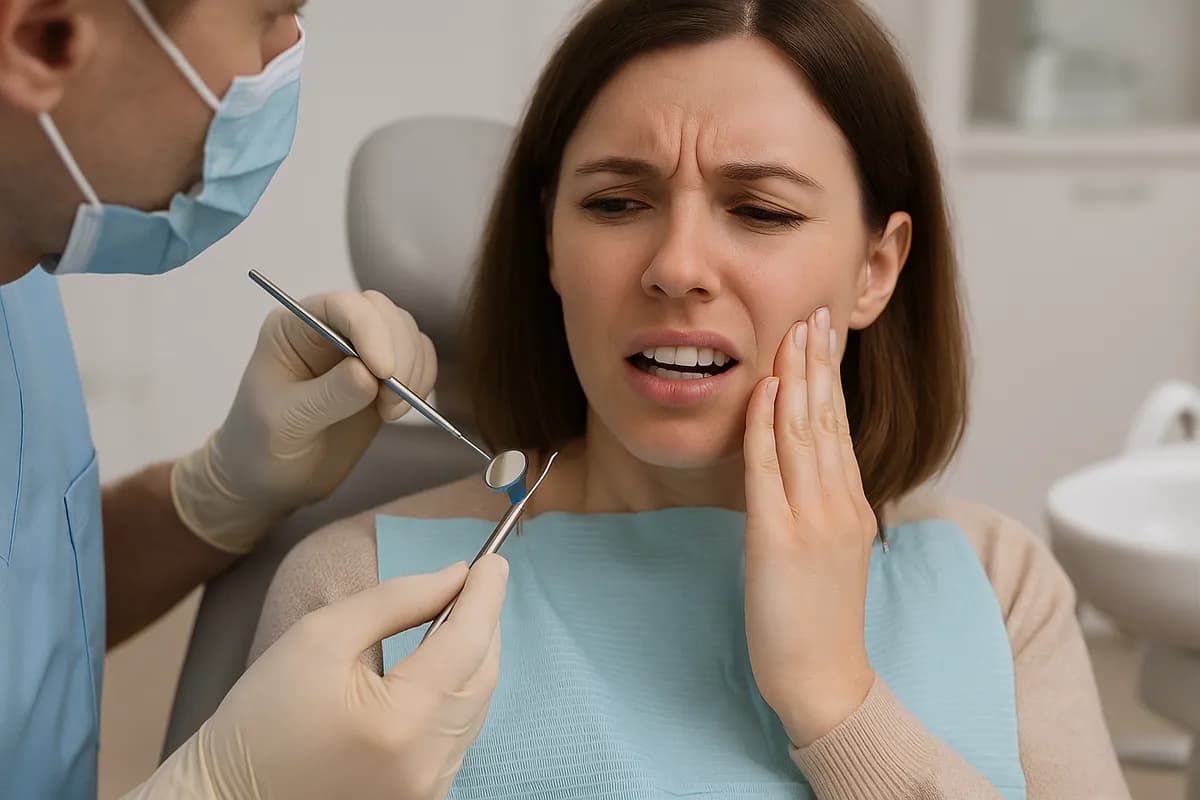
Why Do Some Patients Experience Severe Sensitivity After Scaling?
Severe sensitivity after dental scaling isn’t just due to gum recession! Read the scientific reason behind tooth sensitivity following deep cleaning — and learn how to prevent it.
Why Do Some Patients Experience Severe Sensitivity After Teeth Scaling?
Tooth sensitivity after scaling (professional teeth cleaning) is a very common and usually temporary condition. This sensitivity may last from a few hours to several days and has clear scientific reasons. Below are the main causes of sensitivity after removing dental calculus:
1. Removing Tartar = Exposing the Actual Surface of the Teeth
Dental calculus (tartar) is a hard and thick layer that builds up on the surface of teeth.
When this layer is removed:
Areas of the teeth that were previously covered by tartar (such as tooth roots or sensitive surfaces) become exposed.
These areas are more sensitive to temperature changes, cold drinks, hot foods, acidic substances, and sweets.
This is one of the most important reasons for sensitivity after scaling.
2. Gum Inflammation Before Scaling
When a person has gingivitis or gum inflammation, the gums are usually swollen and may partially cover parts of the teeth.
After scaling:
Gum inflammation decreases.
The gums may slightly recede.
More of the tooth surface or root becomes exposed.
This can make the patient feel increased sensitivity after the procedure.
3. Existing Wear, Tooth Decay, or Small Cracks in the Teeth
In some people:
The enamel may be weakened.
Teeth may have signs of wear (abrasion or attrition).
Small cracks may exist in the tooth structure.
After scaling, these areas become uncovered and more exposed to external stimuli, which can cause pain or sensitivity.
4. Use of Ultrasonic Scaling Devices
The vibrations produced by ultrasonic scaling devices may cause:
Temporary sensitivity in areas with gum recession.
Sensitivity in exposed tooth roots that are no longer protected by gum tissue.
This type of sensitivity is usually short-term.
5. Gum Recession and Exposed Tooth Roots (Gingival Recession)
If a person already has exposed tooth roots due to gum recession, scaling may:
Increase exposure of these sensitive areas to external factors.
Cause stronger sensitivity after cleaning.
Is Sensitivity After Scaling Dangerous?
In 90% of cases, sensitivity after scaling is completely normal and temporary.
Usually:
It decreases within 48 to 72 hours.
It completely disappears within approximately one week.
How Can We Reduce Sensitivity After Scaling?
Use toothpaste designed for sensitive teeth.
Avoid very cold or very hot drinks for 24–48 hours.
Use a fluoride mouthwash or fluoride gel.
Use a soft toothbrush with proper brushing technique.
Avoid acidic foods such as lemon, vinegar, and pickles.
If sensitivity lasts longer than one week or is accompanied by constant pain, there may be another underlying issue, such as:
Tooth decay.
Tooth cracks.
Advanced gum recession.
In these cases, the teeth should be examined by a dentist.
please Login to leave a comment
Add Your Comment
Reviews