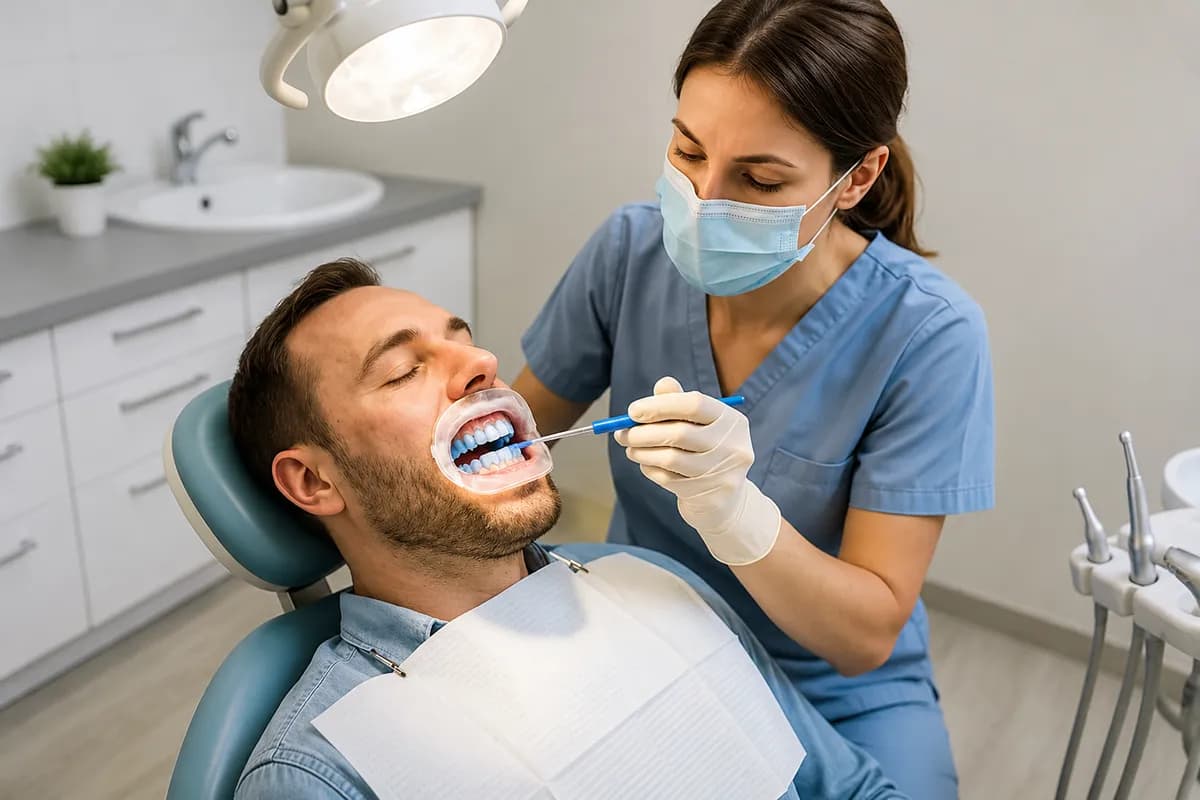
Teeth Whitening
What Is Teeth Whitening and How Can It Make Your Smile Brighter?
Tooth color is one of the most important factors affecting smile aesthetics. Over time, factors such as tea, coffee, smoking, aging, certain foods, and structural changes in tooth enamel can cause discoloration and reduce tooth brightness.
Teeth whitening is one of the most common cosmetic dental procedures, designed to lighten tooth color and create a more attractive and brighter smile.
Below are the most important facts about teeth whitening explained scientifically:
1. How Does Teeth Whitening Work?
Teeth whitening is performed using special materials that can break down stains and pigments that have penetrated the tooth structure.
The main materials commonly used are:
Hydrogen Peroxide
Carbamide Peroxide
These materials release oxygen molecules that break down colored compounds inside the teeth, resulting in a lighter tooth shade.
2. What Causes Tooth Discoloration?
Tooth discoloration can occur due to different factors:
External Factors:
Excessive consumption of tea and coffee.
Colored beverages.
Smoking and tobacco products.
Frequent consumption of staining foods.
Internal Factors:
Aging.
Structural changes in tooth enamel.
Certain medications during tooth development.
Dental trauma.
Identifying the cause of discoloration is the first step in choosing the appropriate whitening method.
3. Teeth Whitening Methods
Different methods are available depending on the condition of the teeth:
In-Office Whitening
One of the fastest methods, performed in a dental clinic under professional supervision.
Advantages:
Fast results.
Precise control of whitening materials.
Suitable for moderate to severe discoloration.
Home Whitening
In this method, the dentist provides a customized tray and suitable whitening materials for home use.
Advantages:
Gradual whitening.
Convenient use at home.
Lower risk of sensitivity when properly adjusted.
Over-the-Counter Whitening Products
Products such as whitening toothpastes or whitening strips may help with surface stains, but they usually do not provide the same strength or long-lasting results as professional treatments.
4. Does Teeth Whitening Damage Tooth Enamel?
When teeth whitening is performed using:
Standard materials.
Appropriate concentrations.
Under the supervision of a dentist.
It generally does not damage tooth enamel.
However, improper use of strong whitening products or non-scientific methods may cause:
Severe tooth sensitivity.
Gum irritation.
Damage to tooth structure.
5. Is Tooth Sensitivity After Whitening Normal?
Some people experience temporary sensitivity after whitening.
This occurs because of:
The movement of whitening agents through enamel pores.
Temporary irritation of the tooth nerve.
This sensitivity is usually short-term and improves with proper care.
6. Who Is a Good Candidate for Teeth Whitening?
People who:
Have healthy teeth.
Do not have active cavities.
Do not have severe gum disease.
Have discoloration caused by natural stains or aging.
are usually suitable candidates.
Before whitening, problems such as:
Tooth decay.
Gum inflammation.
Heavy plaque and tartar buildup.
should be treated first.
7. How Long Do Teeth Whitening Results Last?
The duration of whitening results depends on:
Dietary habits.
Tea, coffee, and smoking consumption.
Oral hygiene.
Regular dental maintenance.
With proper care, whitening results can last from several months to several years.
8. How Can We Maintain Teeth Whitening Results Longer?
To preserve tooth brightness:
Brush regularly.
Use dental floss.
Reduce colored beverages.
Drink water after tea and coffee.
Visit your dentist regularly.
Have polishing and scaling when needed.
These steps can significantly improve long-term results.
Professional Summary
Teeth whitening is an effective method for improving smile aesthetics, but successful results are not only about achieving whiter teeth.
Professional whitening should:
Match the patient’s dental condition.
Protect enamel and gum health.
Provide a natural shade that harmonizes with facial features.
The main goal is to achieve a brighter, more natural, and beautiful smile — not simply the whitest possible shade.
please Login to leave a comment
Add Your Comment
Reviews