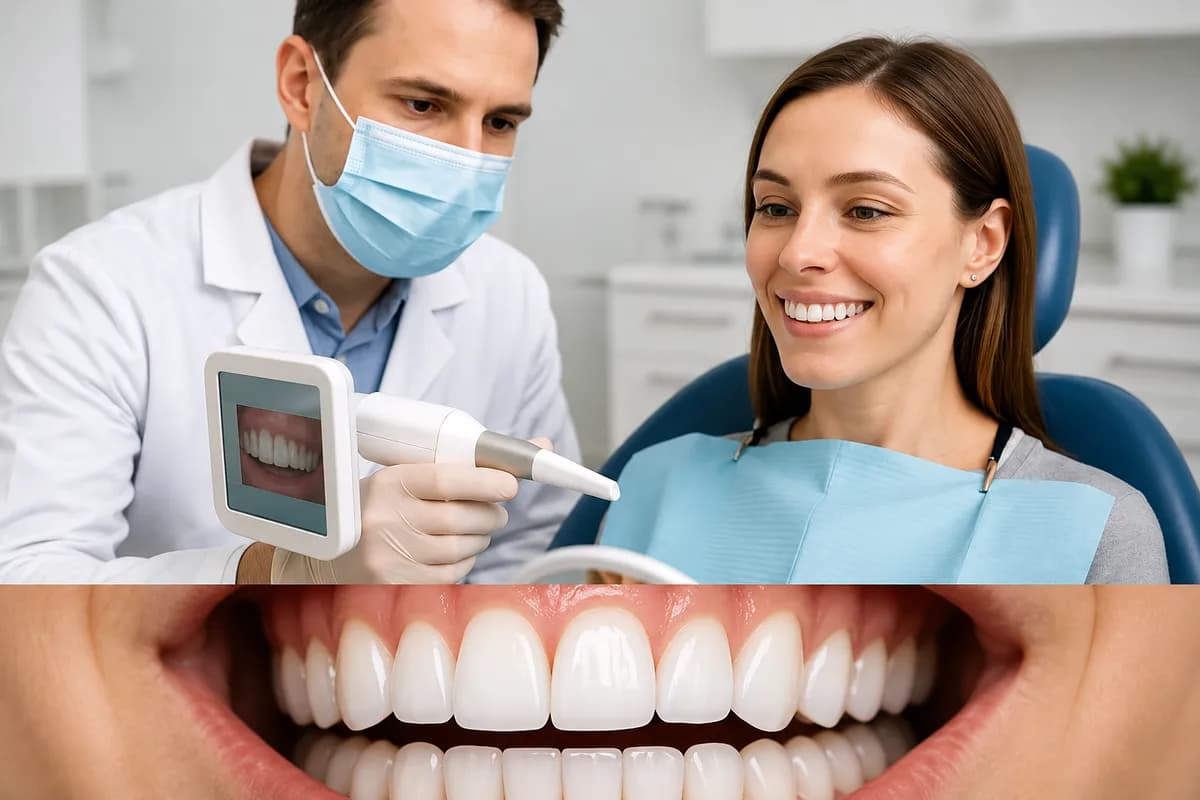
Smile Design
What Is Smile Design and How Can It Transform Facial Appearance?
A smile is one of the most important elements of facial beauty and has a direct impact on self-confidence, social communication, and overall appearance.
Smile design is not just about whitening teeth; it is a specialized process that focuses on creating harmony between the teeth, gums, lips, and the overall facial structure.
The main goal of smile design is to create a natural, balanced, and personalized smile that matches each patient’s unique features.
1. What Is Smile Design?
Smile Design is a personalized treatment plan developed through a detailed evaluation of:
Facial shape.
Lip movement during smiling.
Tooth size and shape.
Tooth color.
Gum line.
The harmony between teeth.
The main goal is to create a smile that is not only attractive but also looks completely natural and balanced with the patient’s facial features.
2. What Factors Are Important in Designing a Beautiful Smile?
An attractive smile consists of several important elements:
Tooth Shape and Size
Teeth should be harmonious in terms of:
Length.
Width.
Shape.
Proportion between teeth.
Teeth that are too long, too short, or poorly proportioned can make a smile look unnatural.
Tooth Color
The color of the teeth should be coordinated with:
Skin tone.
Facial shape.
Patient’s age.
Natural facial characteristics.
The goal is not always the whitest possible shade, but rather:
The most natural and aesthetically suitable color for each individual.
Gum Line
The gums play an important role in smile aesthetics.
Uneven gum levels or excessive gum visibility while smiling can affect the overall appearance of the smile.
In some cases, treatments such as:
Gum contouring.
Gum reshaping.
Treatment of gum inflammation.
may be required.
3. What Methods Are Used in Smile Design?
Depending on each patient’s condition, different techniques may be used:
Dental Veneers
Veneers are used to correct:
Severe tooth discoloration.
Improper tooth shape.
Gaps between teeth.
Minor fractures or chips.
Composite Veneers
A less invasive option used for:
Improving tooth shape.
Enhancing tooth color.
Closing small gaps between teeth.
Teeth Whitening
Used to brighten tooth color and increase the overall radiance of the smile.
Orthodontic Treatment
When the main issues include:
Crooked teeth.
Rotated teeth.
Bite problems.
Orthodontics may become an important part of smile design.
4. Digital Smile Design; Greater Accuracy Before Treatment
Today, with modern digital technology, patients can preview their potential smile results before starting treatment.
Digital Smile Design uses:
3D scanning.
Digital photographs.
Computer-based smile planning.
Benefits include:
Higher treatment accuracy.
Better selection of tooth shape.
Reduced design errors.
A final result that better matches the patient’s expectations.
5. Is Smile Design the Same for Everyone?
No.
One of the most important principles of smile design is:
Personalized treatment planning.
The ideal smile for each person is designed based on:
Facial structure.
Lip shape.
Age.
Gender.
Skin tone.
Individual personality and characteristics.
A beautiful smile should become a natural part of the face, not something separate from it.
6. Care After Smile Design Treatment
To maintain the beauty and durability of the results:
Good oral hygiene is essential.
Regular brushing and flossing should be continued.
Routine dental checkups are important.
Harmful habits such as chewing hard objects or teeth grinding should be avoided.
Professional Summary
Smile design is not just a cosmetic change; it is a combination of:
Dental science, aesthetics, and a precise understanding of each person’s facial features.
A successful smile design should be:
Natural.
Harmonious with facial features.
Protective of tooth and gum health.
Able to increase the patient’s confidence.
The ultimate goal is to create a smile that is beautiful, long-lasting, and perfectly matched with each person’s personality and facial characteristics.
please Login to leave a comment
Add Your Comment
Reviews