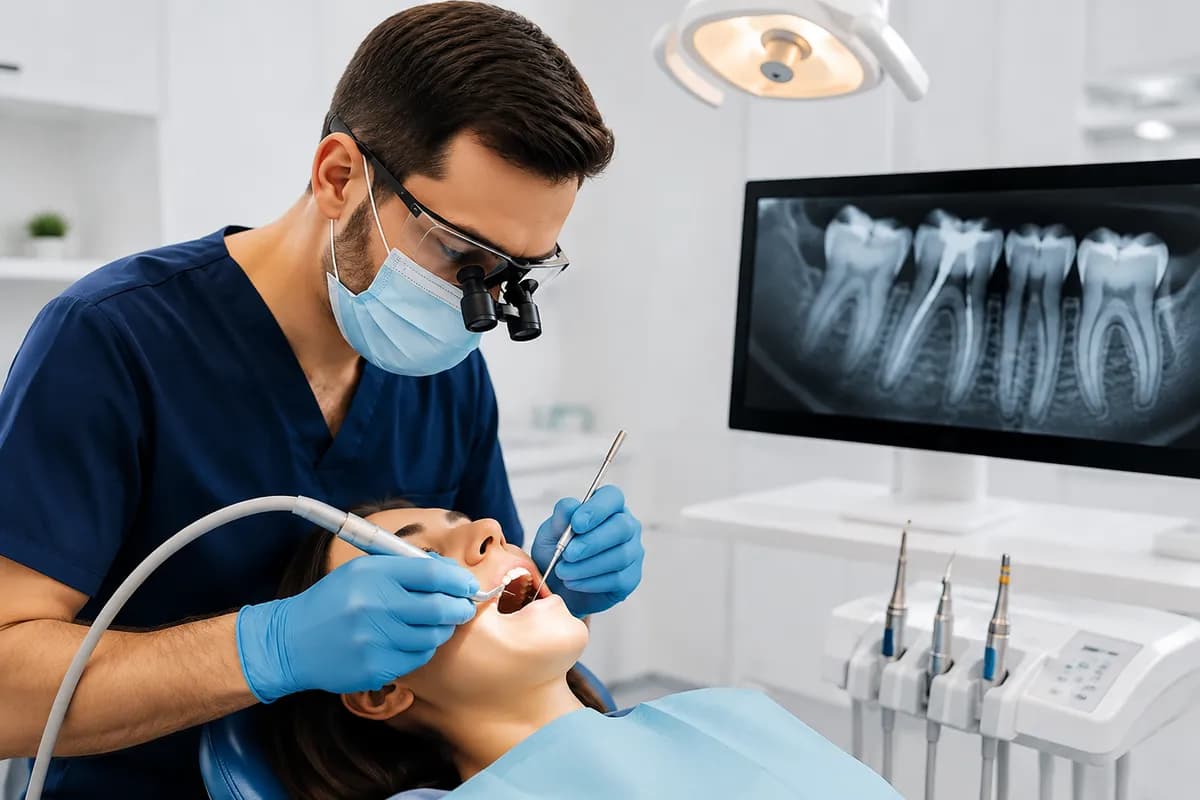
Root Canal Treatment (Endodontic Treatment)
What Is Root Canal Treatment and Why Is It Performed?
Root canal treatment is one of the most important dental procedures used to save a tooth when the dental pulp or nerve becomes inflamed or infected.
The goal of this treatment is to remove infection, preserve the natural tooth structure, and prevent tooth extraction.
1. What Is Root Canal Treatment?
Inside every tooth, there is a part called the dental pulp, which contains nerves and blood vessels.
When deep decay, trauma, or tooth cracks damage this area, root canal treatment may become necessary.
During the procedure:
Damaged and infected tissues are removed.
Root canals are thoroughly cleaned and disinfected.
The inside of the roots is filled with special materials.
2. When Does a Tooth Need Root Canal Treatment?
Signs that a tooth may need root canal treatment include:
Severe and persistent tooth pain.
Long-lasting sensitivity to hot or cold.
Pain while chewing.
Tooth discoloration.
Gum swelling or dental abscess.
In some cases, a tooth may require root canal treatment even without pain, and the problem is discovered through dental examination and X-rays.
3. Steps of Root Canal Treatment
The treatment process usually includes:
Dental examination and X-ray evaluation.
Local anesthesia.
Accessing the root canals.
Cleaning and disinfecting the canals.
Filling and sealing the root canals.
Restoring and rebuilding the crown of the tooth.
The goal is to allow the tooth to regain its normal function after treatment.
4. Is Root Canal Treatment Painful?
With modern techniques and proper anesthesia, most patients do not experience significant pain during the procedure.
After treatment, some patients may experience:
Mild sensitivity.
Discomfort while chewing.
These symptoms are usually temporary and gradually improve.
5. Why Is Preserving the Natural Tooth Important?
Tooth extraction is not always the best solution.
Saving the natural tooth helps to:
Maintain chewing function.
Prevent movement of neighboring teeth.
Reduce jawbone loss.
Decrease the need for replacement treatments such as dental implants.
6. Care After Root Canal Treatment
To increase the lifespan of the treated tooth:
Do not delay the final restoration of the tooth.
Maintain good oral hygiene.
Avoid putting excessive pressure on the tooth during the first days.
Have regular dental checkups.
In many cases, a root canal-treated tooth can continue to function for many years with proper care.
Professional Summary
Root canal treatment is not only about eliminating pain; it is a procedure designed to save the natural tooth and prevent further damage.
A successful root canal treatment depends on:
Accurate diagnosis.
Complete cleaning of the root canals.
Proper treatment technique.
Suitable restoration after treatment.
The ultimate goal is to preserve the tooth and restore its natural function for as long as possible.
please Login to leave a comment
Add Your Comment
Reviews