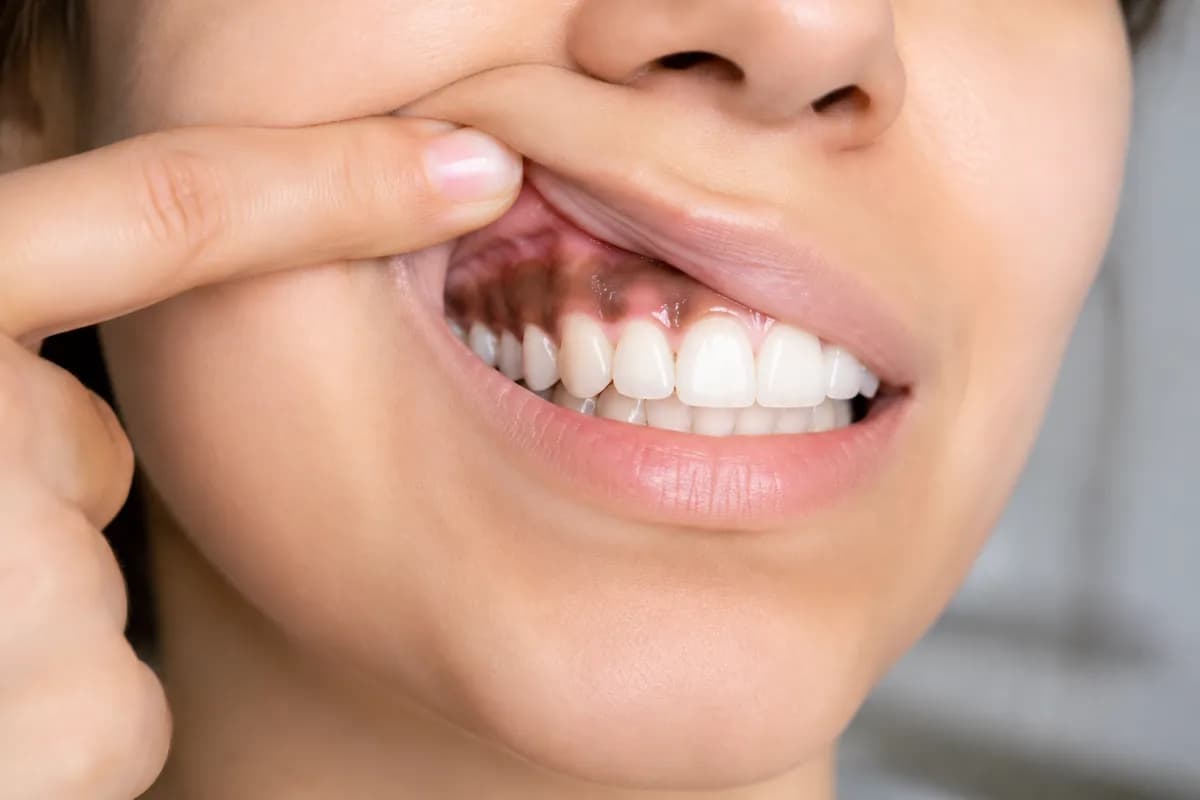
Gum color change; is it normal or should we be worried?
A change in gum color is not something you can ignore! In this article, find out when gum discoloration is normal and when it’s a sign of a serious oral or gum disease.
Gum Color Changes: Is It Normal or Should You Be Concerned?
Gums are usually pink in color and have a uniform surface. Any change in gum color — from pink to dark, red, white, or purple — may result from natural variations, inflammation, or in some cases, may indicate an underlying health condition.
Understanding the difference between normal and abnormal changes is very important for maintaining oral health.
1. Natural Changes in Gum Color
Gum color is not the same for everyone and depends on:
Genetics.
Skin color.
The amount of melanin pigmentation in the gums.
🔸 Normal variations include:
Brown or dark gray gums in people with darker skin tones.
Small areas of melanin pigmentation on the gums.
Mild color changes due to aging or seasonal variations.
💡 These types of changes are completely harmless and usually do not require treatment.
2. Warning Signs of Abnormal Gum Color Changes
Some color changes occur due to inflammation or disease and should be taken seriously.
A) Red or Purple Gums
Possible causes include:
Gingivitis or periodontal disease.
Bleeding during tooth brushing.
Poor oral hygiene or plaque buildup.
B) White or Grayish-White Gums
Possible causes include:
Fungal infections.
Oral ulcers.
Anemia.
Sometimes it can also result from:
Chemical burns caused by strong toothpaste or alcohol-based mouthwashes.
These conditions require evaluation by a dentist.
C) Sudden Darkening or Black Appearance of the Gums
Possible causes include:
Certain medications.
Smoking.
Abnormal pigment accumulation.
If the change appears suddenly or occurs only in one specific area (such as a single spot), it should be examined to rule out conditions such as oral melanoma.
3. Factors That Affect Gum Color Changes
These include:
Smoking and tobacco use: They can cause darker pigmentation and reduce blood circulation in the gums.
Medications: Such as minocycline and some antimalarial drugs, which may alter gum color.
Vitamin deficiencies (especially vitamin C and B12): Can cause pale gums or severe inflammation.
Stress and hormonal changes: During pregnancy or menstruation, gums may become darker or more red.
Systemic diseases: Such as diabetes, anemia, kidney disease, or heart disease may directly affect gum color.
4. Diagnosis and Treatment
The first step is visiting a dentist to determine the exact cause of the color change.
Treatment depends on the underlying cause:
Inflammation → Professional cleaning and improved oral hygiene.
Fungal infections → Antifungal treatment.
Medication-related discoloration → Reviewing medications and changing them if necessary.
Systemic causes → Treating the underlying medical condition.
If overall health is confirmed and the discoloration is only cosmetic, it can be corrected through:
Laser treatment.
Simple surgical procedures.
Such as:
Gum depigmentation.
5. Conclusion
Gum color changes are not always a cause for concern; in many cases, they are completely normal and related to genetics.
However, if the change is:
Sudden.
Associated with pain.
Swelling.
Bleeding.
Or unusual spots.
A professional dental evaluation is recommended.
The health and color of your gums can reflect your overall health — therefore, ignoring gum changes may be an early sign of hidden health problems.
please Login to leave a comment
Add Your Comment
Reviews