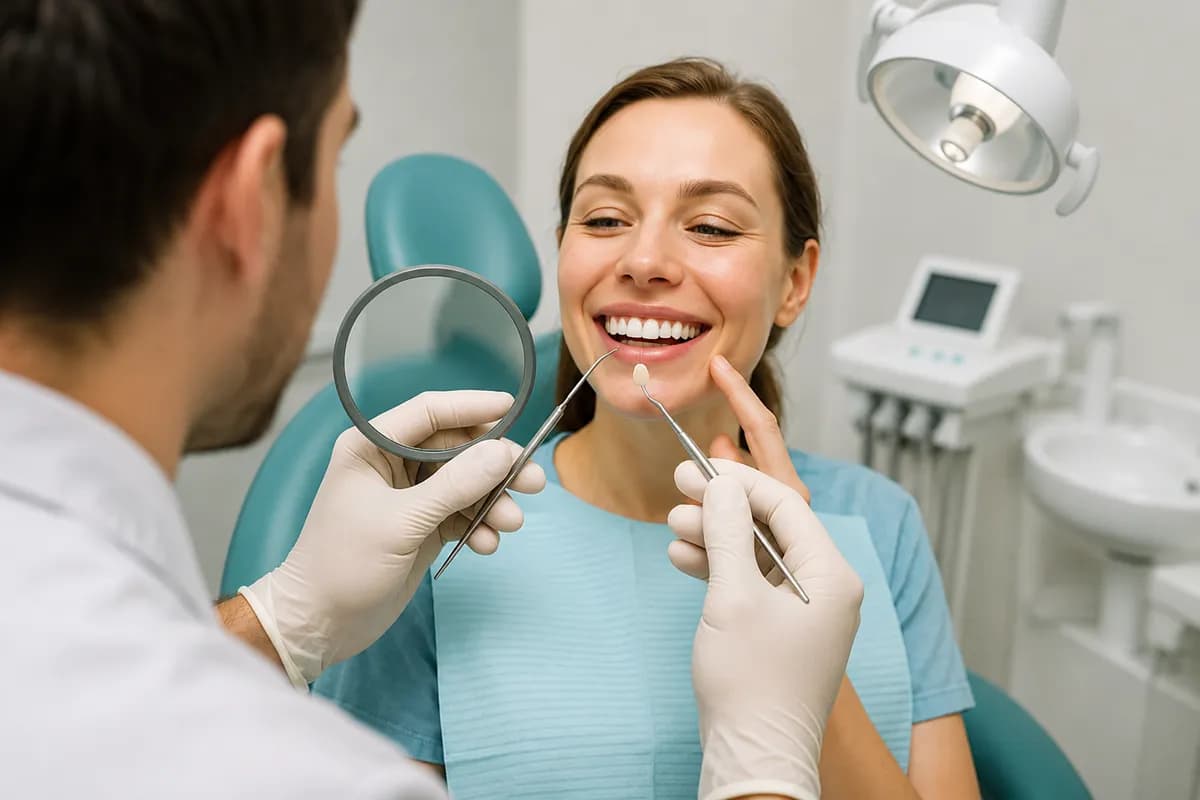
Dental Veneers
What Are Dental Veneers and How Can They Transform the Appearance of Your Smile?
Dental veneers are one of the most popular cosmetic dentistry treatments used to improve the color, shape, size, and harmony of the front teeth.
In this procedure, a thin and durable layer is placed on the front surface of the teeth to create a more natural, balanced, and attractive smile.
The goal of veneers is not only to make teeth whiter, but also to create harmony between the tooth shape, smile line, gums, and overall facial structure.
1. What Are Dental Veneers?
Dental veneers are thin shells that are bonded to the front surface of teeth.
They are usually made from materials such as ceramic or porcelain and can correct many aesthetic dental problems, including:
Tooth discoloration that does not respond to whitening.
Minor tooth fractures or chips.
Gaps between teeth.
Mild tooth misalignment.
Irregular tooth shape.
Short teeth or disproportionate tooth sizes.
2. Who Is a Good Candidate for Dental Veneers?
People with the following conditions may be suitable candidates for veneers:
Discolored teeth.
Small gaps between teeth.
Minor tooth fractures or chips.
Asymmetry of the front teeth.
Small or short teeth.
Mild irregularities that do not require full orthodontic treatment.
However, before placing veneers, the health of the following must be carefully evaluated:
Gums.
Tooth roots.
Tooth enamel.
Bite alignment and tooth contact.
3. Steps of the Dental Veneer Procedure
The treatment usually includes several stages:
Smile Evaluation and Design
First, the dentist evaluates:
Facial structure.
Lip position.
Smile line.
Skin tone.
Tooth shape.
The goal is to select a tooth shape and color that naturally match the patient’s facial features.
Tooth Preparation
In some cases, a very small amount of enamel is removed from the tooth surface to allow proper veneer placement.
The amount of preparation depends on:
The original tooth shape.
The type of veneer.
The position of the tooth.
Dental Impression or Digital Scanning
After preparation, an impression or digital scan of the teeth is taken.
The information is then sent to the dental laboratory to create accurately designed veneers.
Final Placement
After checking:
Color.
Shape.
Size.
Smile harmony.
The veneers are bonded to the teeth using special dental materials.
4. What Are the Advantages of Porcelain Veneers?
The main benefits include:
A highly natural appearance.
Excellent color stability.
Better resistance to surface stains.
Improvement of tooth shape.
Better smile line harmony.
Precise selection of tooth color and design.
Significant improvement in the appearance of front teeth.
5. Do Veneers Damage Teeth?
When veneers are performed with:
Proper diagnosis.
Suitable treatment planning.
Precise tooth preparation.
An experienced dentist.
They can be a safe and predictable treatment option.
However, excessive tooth preparation or choosing an unsuitable case may lead to:
Tooth sensitivity.
Loss of healthy enamel.
Bonding problems.
The need for more complex treatments in the future.
Therefore, preserving as much natural enamel as possible is extremely important.
6. Which Is Better: Porcelain Veneers or Composite Veneers?
Both methods are used to improve smile aesthetics, but they have differences.
Porcelain Veneers
Higher resistance to discoloration.
More natural appearance in many cases.
Longer durability.
Require laboratory fabrication.
Composite Veneers
Usually completed in a shorter time.
Lower cost.
Easier to repair.
More likely to experience color changes over time compared with porcelain.
The best choice depends on the patient’s dental condition and expectations.
7. How Long Do Dental Veneers Last?
The lifespan of veneers depends on several factors:
Quality of materials.
Dentist’s skill in placement.
Bite condition.
Oral hygiene.
Patient habits.
With proper care, porcelain veneers can last many years.
8. What Causes Veneer Failure or Detachment?
The most common causes include:
Severe teeth grinding (Bruxism).
Chewing hard objects.
Breaking ice or nuts with teeth.
Dental trauma.
Severe bite problems.
Poor oral hygiene.
Weak bonding.
For patients with teeth grinding, a night guard may be recommended.
9. Do Veneered Teeth Require Special Care?
Yes.
Having veneers does not mean that dental care is no longer needed.
To maintain their health and appearance:
Brush your teeth daily.
Use dental floss.
Attend regular dental checkups.
Avoid chewing hard objects.
Maintain healthy gums.
The natural tooth underneath the veneer can still develop decay or gum problems.
10. How Is Veneer Color Selected?
A common mistake is thinking that the whitest shade is always the best choice.
The ideal veneer color should match:
Skin tone.
Facial shape.
Age.
Eye whiteness.
Lip shape.
The color of other teeth.
A professional veneer should look natural, not artificial or excessively white.
Professional Summary
Dental veneers are one of the most effective treatments for improving the appearance of front teeth and creating a beautiful smile.
They can help improve:
Tooth color.
Tooth shape.
Gaps between teeth.
Minor fractures.
Smile imbalance.
However, veneer success is not based only on aesthetics; it mainly depends on:
Proper patient selection, preservation of tooth enamel, accurate design, and careful evaluation of bite conditions.
The goal of successful veneers is not simply to create extremely white and identical teeth, but to achieve a natural, balanced smile that perfectly matches each person’s facial features.
please Login to leave a comment
Add Your Comment
Reviews