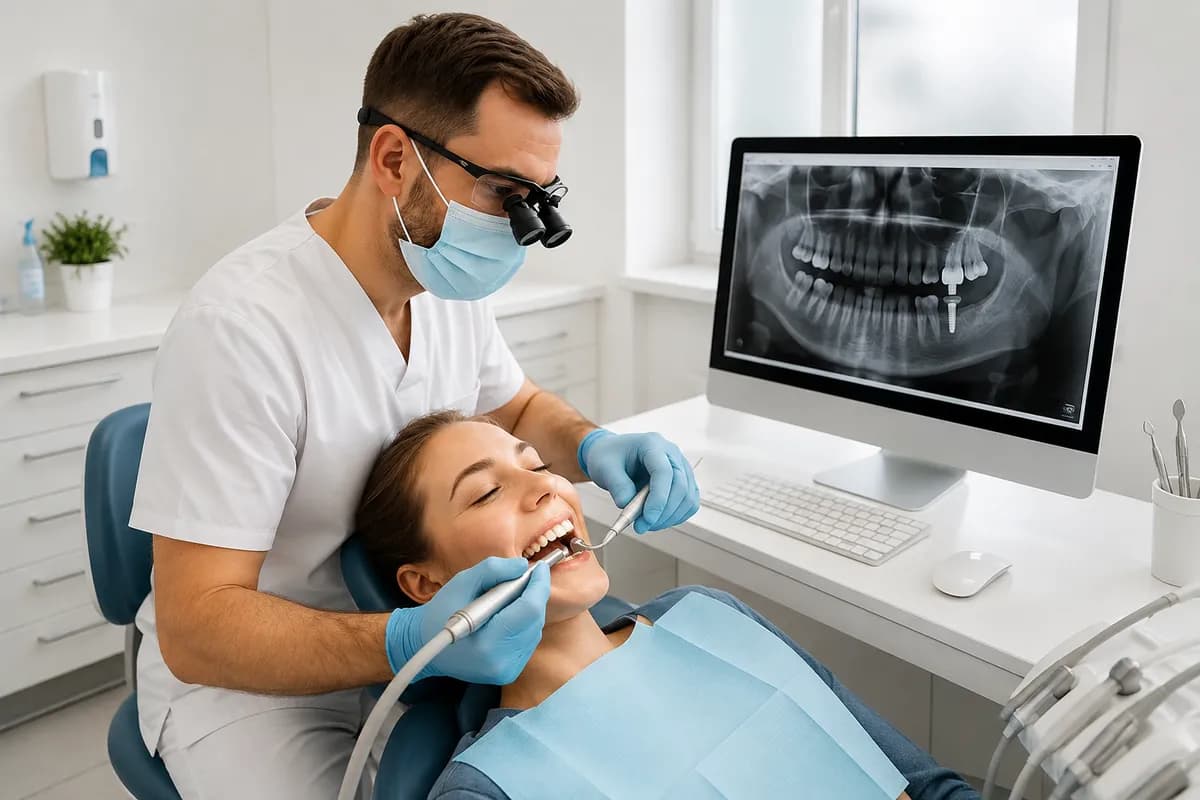
Dental Prosthesis
What Are Dental Prostheses and How Do They Help Restore Smile Function and Aesthetics?
Losing one or more teeth is not only an aesthetic problem; it can also affect chewing ability, speech, facial appearance, and self-confidence.
Dental prostheses are effective solutions for replacing missing teeth and are designed to restore function, aesthetics, and natural smile harmony.
1. What Are Dental Prostheses?
Dental prostheses are artificial structures used to replace missing teeth or restore damaged parts of teeth.
They include:
Removable Dentures: Used to replace several missing teeth or all teeth.
Fixed Prostheses: Such as crowns and bridges that are permanently attached to teeth or implants.
Implant-Supported Prostheses: A combination of dental implants and prosthetic teeth to provide greater stability.
2. Why Are Dental Prostheses Important?
Replacing missing teeth helps to:
Improve chewing ability.
Make speech more natural.
Reduce jawbone loss.
Maintain facial structure.
Increase confidence while smiling.
Missing teeth can also cause neighboring teeth to shift and affect jaw alignment.
3. Types of Dental Prostheses
Removable Dentures
These prostheses can be removed from the mouth and are commonly used for people who have lost several teeth or all teeth.
Advantages:
More affordable option.
Restores chewing function.
Can be adjusted and modified.
Fixed Prostheses
Fixed prostheses, such as crowns and bridges, are permanently attached to teeth or implants.
Advantages:
More natural appearance.
Greater stability.
A feeling closer to natural teeth.
Implant-Supported Prostheses
In this method, the prosthetic teeth are supported by dental implants.
Advantages:
High strength and stability.
Better prevention of jawbone loss.
Greater comfort during chewing and speaking.
4. Steps of Making Dental Prostheses
The treatment process usually includes:
Evaluating the condition of teeth and jawbone.
Designing the appropriate tooth shape and size.
Taking impressions or digital scans.
Fabricating the prosthesis in a dental laboratory.
Final adjustments to match the patient’s bite and smile.
The goal is to create a prosthesis that perfectly matches the patient’s oral condition and facial features.
5. How Long Do Dental Prostheses Last?
The lifespan of dental prostheses depends on several factors:
Quality of materials.
Accuracy of fabrication and placement.
Oral hygiene habits.
Chewing forces.
Regular dental checkups.
With proper care, many dental prostheses can function effectively for many years.
6. How Should Dental Prostheses Be Maintained?
To increase the lifespan of prostheses:
Maintain regular oral hygiene.
Clean removable dentures according to the dentist’s instructions.
Avoid chewing extremely hard foods.
Attend regular dental examinations.
Maintain healthy gums.
Professional Summary
Dental prostheses are not only replacements for missing teeth; they are treatments designed to restore aesthetics, function, and quality of life.
A successful dental prosthesis should:
Look natural.
Match facial features and smile design.
Provide proper chewing function.
Be created with accurate and professional planning.
The ultimate goal of dental prosthetics is to create a natural smile and restore the feeling of having healthy, functional teeth.
please Login to leave a comment
Add Your Comment
Reviews