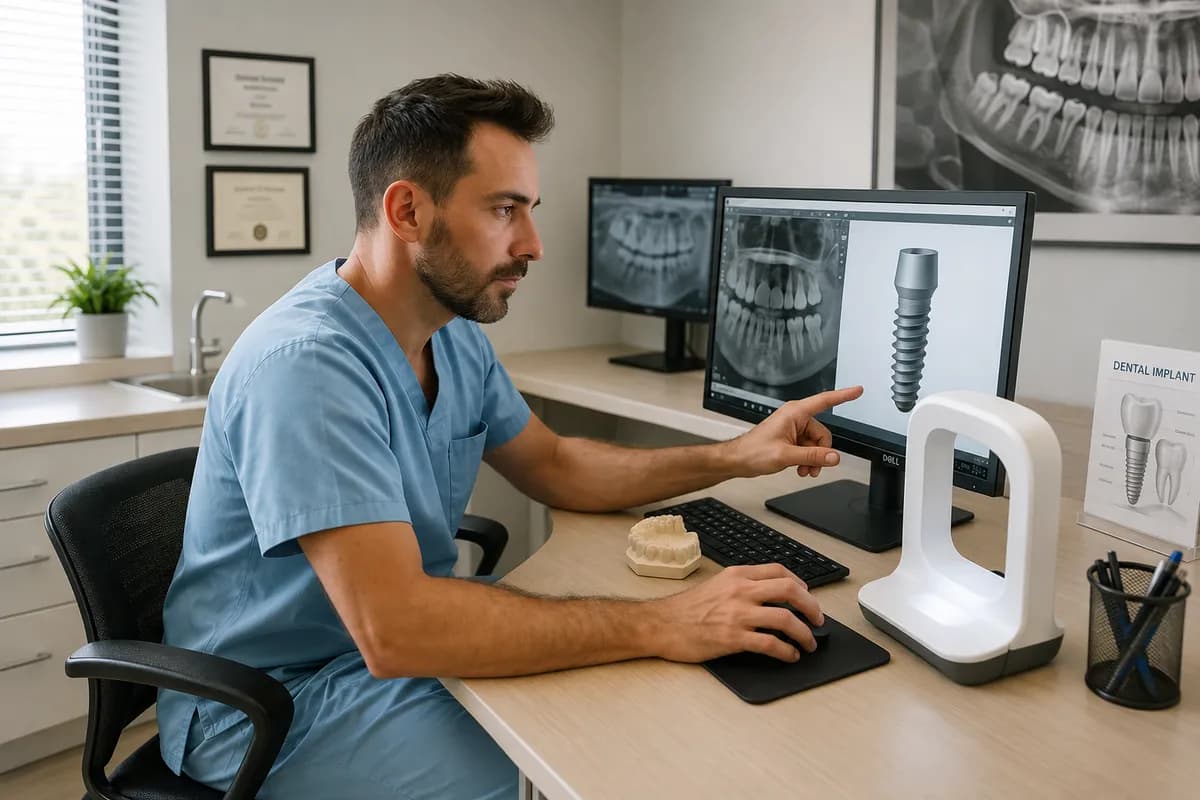
Dental Implants
What Are Dental Implants and Why Are They One of the Best Solutions for Replacing Missing Teeth?
Losing a tooth is not only an aesthetic issue; it can also affect chewing ability, speech, jawbone health, and self-confidence.
Dental implants are one of the most advanced treatment options for replacing missing teeth. By providing a natural appearance and function similar to real teeth, implants can significantly improve a patient’s quality of life.
Below, we explain the most important points about dental implants in a scientific and comprehensive way:
1. How Do Dental Implants Work?
A dental implant is a small post made of titanium or other biocompatible alloys that is placed into the jawbone.
A dental implant consists of three main parts:
Fixture: The titanium part that is placed inside the jawbone.
Abutment: The connector between the implant and the dental crown.
Dental Crown: The visible part that restores the appearance of a natural tooth.
After placement, the jawbone gradually bonds with the implant through a process called osseointegration.
2. Why Are Dental Implants Better Than Traditional Methods?
Traditional methods such as bridges and removable dentures may create several limitations.
Benefits of dental implants include:
A completely natural appearance.
A feeling similar to real teeth while chewing.
Prevention of jawbone loss.
No need to damage or reshape healthy adjacent teeth.
High stability and durability.
Increased confidence while speaking and smiling.
Dental implants are the only solution that can replace not only the visible tooth but also the tooth root.
3. Who Is a Good Candidate for Dental Implants?
Most people who have lost one or more teeth can be suitable candidates for dental implants.
Ideal conditions include:
Good overall health.
Sufficient jawbone volume.
Relatively healthy gums.
Proper oral hygiene habits.
For patients who do not have enough bone, additional procedures may be required before implant placement, such as:
Bone grafting
Sinus lift
4. Is Dental Implant Surgery Painful?
One of the most common concerns among patients is pain during implant treatment.
However, with the use of:
Local anesthesia.
Precise surgical techniques.
Modern dental equipment.
Most patients do not experience significant pain during the procedure.
Mild swelling or discomfort after surgery is normal and can usually be managed with proper care.
5. How Long Do Dental Implants Last?
Dental implants are among the most durable treatments in dentistry.
With proper care, including:
Regular brushing and flossing.
Routine dental checkups.
Maintaining healthy gums.
Avoiding harmful habits such as teeth grinding.
Dental implants can last many years and even several decades.
6. What Factors Can Cause Dental Implant Failure?
Although dental implants have a very high success rate, certain factors can increase the risk of failure:
Poor oral hygiene.
Uncontrolled gum disease.
Smoking and tobacco use.
Excessive pressure caused by teeth grinding.
Poor jawbone quality.
Incorrect treatment planning.
That is why a detailed evaluation before implant placement is extremely important.
7. Digital Dental Implants; The New Generation of Implant Treatment
Today, digital technologies have made implant procedures more accurate and predictable.
Digital implant dentistry uses:
3D jaw scanning.
Computer-guided implant planning.
Customized surgical guides.
These technologies provide:
Higher accuracy.
Reduced surgical errors.
Better prediction of the final result.
8. Care After Dental Implant Placement
To increase treatment success:
Maintaining excellent oral hygiene is essential.
Excessive pressure on the implant should be avoided during the healing period.
Regular follow-up visits with the dentist are very important.
Gum health must be maintained.
Like natural teeth, implants require regular care and maintenance.
Professional Summary
Dental implants are not just a cosmetic replacement for missing teeth; they are a scientific solution for restoring the root, function, and aesthetics of teeth.
The main advantages of dental implants include:
Natural appearance.
Function similar to real teeth.
Prevention of jawbone loss.
Long-term durability.
Improved quality of life.
Choosing the right patient, accurate treatment planning, and proper surgical execution are the three key factors for achieving a successful and long-lasting dental implant.
please Login to leave a comment
Add Your Comment
Reviews